
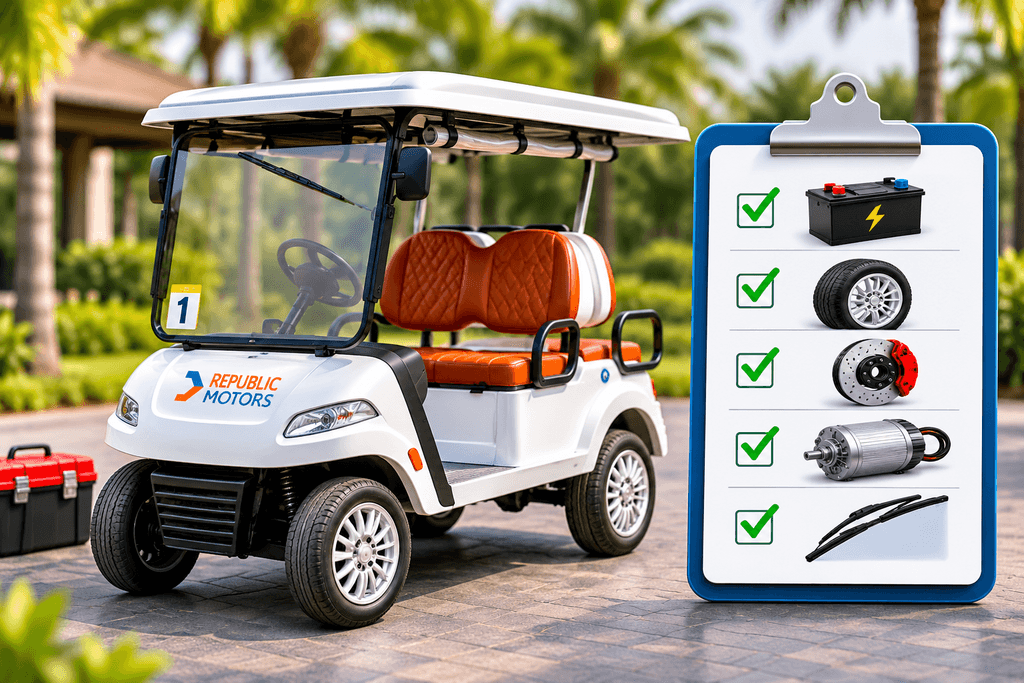
An electric golf cart maintenance checklist helps businesses keep their vehicles in good operating condition, identify potential problems early, and reduce unexpected interruptions. Regular inspections of batteries, tyres, brakes, steering, electrical connections, body components, and safety equipment are essential for managing a commercial golf cart fleet.
Republic Motors has been manufacturing electric vehicles for Indian business requirements since 2013. Its electric golf cart solutions serve applications such as golf courses, hotels, resorts, campuses, and commercial facilities. For businesses operating multiple vehicles, a structured maintenance routine can help improve fleet management and support consistent day-to-day operations.
Whether your business operates 4-seater, 6-seater, or 8-seater electric golf carts, maintenance should be planned according to vehicle usage, manufacturer recommendations, and operating conditions.
Why Is Electric Golf Cart Maintenance Important for Business Fleets?
Electric golf carts are often used throughout the day for passenger transportation, internal movement, luggage handling, and other commercial activities. When several vehicles operate at the same location, even a minor maintenance issue can affect daily operations.
A preventive maintenance programme helps businesses:
- Identify mechanical and electrical issues before they become major problems.
- Maintain tyre, brake, steering, and battery condition.
- Reduce unexpected vehicle downtime.
- Improve operational safety for drivers and passengers.
- Maintain records of vehicle inspections and servicing.
- Plan maintenance expenses and replacement requirements.
- Keep vehicles available for scheduled business activities.
Maintenance is not limited to repairing a vehicle after it stops working. Regular inspections help fleet managers understand vehicle condition and plan servicing before problems affect operations.
1. Daily Electric Golf Cart Maintenance Checklist
Daily inspections should be performed before vehicles begin their operating shifts. These checks help drivers identify visible problems and report issues to the maintenance team.
The following checklist can be used as a starting point for commercial golf cart fleets.
| Inspection area | What to check |
| Battery | Check battery indicators and look for visible damage or unusual conditions |
| Tyres | Inspect tyre pressure, tread, and visible damage |
| Brakes | Check normal brake operation before use |
| Steering | Check for unusual resistance or looseness |
| Lights | Test headlights, indicators, and other fitted lights |
| Horn | Confirm that the horn operates correctly |
| Seat and seat belts | Check seating condition and fitted restraints |
| Body and chassis | Look for visible damage or loose components |
| Charging port | Check for visible damage, moisture, or loose connections |
| Controls | Check accelerator, forward/reverse selector, and other controls |
Battery condition
Check the battery indicator before the vehicle starts its daily route. Look for warning lights, unusual heat, leakage, swelling, or visible damage where accessible.
Do not open battery compartments or attempt electrical repairs unless the task is permitted by the manufacturer and performed by trained personnel.
Tyres and wheels
Inspect tyres for cuts, cracks, uneven wear, and visible pressure problems. Check wheels for obvious damage or loose components.
Correct tyre pressure should follow the vehicle manufacturer’s specifications.
Brakes and steering
Test the brakes and steering in a safe, designated area before putting the vehicle into regular service. If the brakes feel unusual, steering becomes difficult, or the vehicle makes unexpected noises, report the issue for inspection.
Lights, horn, and safety equipment
Confirm that the horn, lights, indicators, mirrors, seat belts, and other fitted safety equipment are in working condition.
A vehicle should not be assigned to passenger transportation if an important safety component is defective.
2. Weekly Electric Golf Cart Maintenance Checklist
Weekly inspections should involve a closer examination of vehicle components. These checks are particularly useful for golf courses, hotels, resorts, campuses, and facilities where vehicles operate regularly.
| Maintenance area | Weekly inspection |
| Battery connections | Check accessible connections for visible corrosion, looseness, or damage |
| Tyres | Review pressure and uneven tread wear |
| Wheel assemblies | Inspect for unusual noise or visible damage |
| Brakes | Check operation and report abnormal sounds or performance |
| Steering | Inspect for unusual play or resistance |
| Electrical components | Check accessible wiring and connectors for visible damage |
| Body and chassis | Inspect for loose fittings, cracks, and damage |
| Seating | Check seats, handles, and passenger-access areas |
| Cleaning | Remove accumulated dust, dirt, and debris |
| Accessories | Inspect fitted accessories and operational equipment |
Inspect accessible electrical connections
Loose or damaged electrical connections can affect vehicle operation. Inspect accessible connectors and wiring for visible signs of wear, corrosion, overheating, or damage.
Do not disconnect high-current components or carry out electrical repairs without appropriate training.
Check the braking system
Pay attention to unusual noises, reduced braking response, or changes in pedal or control behaviour. Brake inspection and adjustment should be performed according to the manufacturer’s service procedure.
Clean the vehicle properly
Remove dust, mud, and debris from the body, seating area, floor, and accessible components. Use cleaning products and methods suitable for the vehicle.
Avoid directing high-pressure water or excessive moisture towards electrical components, battery compartments, connectors, and charging equipment unless the manufacturer specifically permits it.
3. Monthly Electric Golf Cart Maintenance Checklist
Monthly maintenance should provide a more detailed view of vehicle condition. Depending on usage and manufacturer guidance, some checks may need to be performed more frequently.
| Component | Monthly maintenance activity |
| Battery system | Review battery condition and any recurring warning indicators |
| Charger | Inspect approved charging equipment and connectors |
| Brakes | Arrange a detailed inspection according to the service schedule |
| Tyres | Review wear patterns and overall condition |
| Steering | Check steering components for abnormal movement |
| Suspension | Inspect accessible components for damage or unusual wear |
| Electrical system | Review recurring faults and diagnostic warnings |
| Fasteners | Check specified fittings for looseness |
| Body and chassis | Inspect structural and cosmetic condition |
| Service records | Review completed maintenance and outstanding issues |
Review battery performance
Monitor recurring battery warnings, charging interruptions, and changes in vehicle performance. If a vehicle appears to lose operating capacity unexpectedly, arrange a professional inspection rather than assuming that the battery needs replacement.
Inspect suspension and steering components
Commercial golf carts may travel across different surfaces throughout the day. Inspect accessible suspension and steering components for damage, unusual noise, or abnormal movement.
Any repair or adjustment should follow the manufacturer’s specifications.
Review service history
Monthly reviews help fleet managers identify vehicles that require additional attention. Repeated faults, frequent repairs, and unusual changes in performance should be recorded and investigated.
4. Battery and Electrical System Maintenance
The battery and electrical system are essential parts of an electric golf cart. Their maintenance requirements depend on the battery chemistry, vehicle configuration, and manufacturer’s instructions.
Businesses should consider the following practices:
- Use only a charger approved for the vehicle’s battery system.
- Follow the recommended charging procedure.
- Inspect accessible cables and connectors for visible damage.
- Keep charging equipment clean, dry, and properly stored.
- Avoid unauthorised modifications to electrical components.
- Record recurring battery or charger warning indicators.
- Arrange professional inspection if unusual heat, swelling, leakage, or electrical faults appear.
Lead-acid and lithium-ion batteries have different maintenance and charging requirements. Some lead-acid batteries require specific electrolyte maintenance, while sealed types do not. Lithium-ion systems require compatible charging equipment and operation within their specified temperature limits.
Never apply one battery’s maintenance procedure to another battery type without checking its documentation.
For more information, read our related guide: Electric Golf Cart Battery Types: What Buyers Should Compare.
5. Tyre, Brake, and Steering Maintenance
Tyres, brakes, and steering directly affect vehicle handling and passenger safety. These components deserve regular attention, particularly when golf carts operate continuously across large properties.
Tyre maintenance
- Maintain the manufacturer’s recommended tyre pressure.
- Inspect for cuts, cracks, punctures, and uneven wear.
- Check for visible wheel damage.
- Replace tyres according to their condition and manufacturer recommendations.
- Investigate recurring pressure loss.
Brake maintenance
- Check normal braking operation before daily use.
- Report unusual noise or changes in braking response.
- Arrange periodic brake inspections.
- Replace worn components according to service recommendations.
- Do not operate a vehicle with a suspected brake fault.
Steering maintenance
- Check steering response during the daily inspection.
- Report unusual looseness, resistance, or vibration.
- Inspect steering components during scheduled servicing.
- Have damaged or worn components assessed by a qualified technician.
Regular attention to these areas helps fleet operators identify problems before they affect routine transportation.
6. Cleaning, Body, Seating, and Safety Equipment
The physical condition of an electric golf cart is also important, especially when vehicles are used for guest transportation at hotels, resorts, and golf courses.
A clean and properly maintained vehicle supports a better passenger experience and helps maintenance teams identify visible damage.
Include these checks in the fleet maintenance routine:
Body and exterior: Inspect body panels, windshields, roof structures, and other fitted components for cracks, damage, or loose fittings.
Seating: Check seat cushions, mounting points, handles, and passenger access areas.
Flooring: Remove dirt and debris that may affect passenger access or create slipping hazards.
Mirrors: Confirm that fitted mirrors are secure and provide appropriate visibility.
Safety equipment: Inspect seat belts, lights, horn, and other safety features provided with the vehicle.
Accessories: Check fitted storage compartments, cargo arrangements, and other accessories for damage.
Any damaged safety equipment should be repaired or replaced before the vehicle returns to service.
7. Preventive Maintenance Schedule for Business Fleets
A preventive maintenance schedule helps businesses organise inspections instead of waiting for vehicle problems to occur.
The following is a general planning framework. Actual service intervals must follow the vehicle manufacturer’s manual and may need to be shorter for heavily used fleets.
| Frequency | Recommended activities |
| Before every shift | Check tyres, brakes, steering, battery indicators, lights, horn, and visible damage |
| Weekly | Inspect accessible electrical connections, body components, tyres, and seating |
| Monthly | Review battery and charger condition, steering, suspension, brakes, and service records |
| As recommended by manufacturer | Perform scheduled servicing, adjustments, replacements, and detailed technical inspections |
| After an incident or fault | Inspect affected components before returning the vehicle to service |
Why should fleet managers maintain inspection records?
A maintenance log gives businesses a clear record of each vehicle’s condition and service history.
A useful fleet maintenance record should include:
- Vehicle identification or fleet number.
- Model and seating capacity.
- Inspection date.
- Vehicle operating hours or usage information, where available.
- Inspection results.
- Reported faults.
- Maintenance work completed.
- Replacement parts used.
- Technician or responsible employee.
- Next scheduled inspection.
This information helps identify recurring issues, compare maintenance requirements across vehicles, and plan servicing more effectively.
8. Common Electric Golf Cart Maintenance Mistakes to Avoid
Even businesses with maintenance teams can experience problems when routine inspections are inconsistent.
Avoid these common mistakes:
Ignoring minor warning signs: Unusual noises, warning lights, vibration, or changes in vehicle response should be investigated.
Skipping daily inspections: A vehicle may develop a problem between scheduled service appointments. Daily checks help identify visible issues early.
Using incompatible charging equipment: Always confirm charger compatibility with the battery system and vehicle specifications.
Ignoring tyre pressure: Incorrect pressure and uneven wear can affect handling and vehicle performance.
Delaying brake repairs: A suspected braking issue should be addressed before the vehicle is used again.
Using untrained personnel for electrical repairs: High-current electrical systems and battery components require appropriate knowledge and safety procedures.
Not maintaining service records: Without maintenance records, it becomes difficult to track recurring faults and overdue servicing.
Overloading vehicles: Always follow the manufacturer’s passenger and payload limits.
9. When Should an Electric Golf Cart Receive Professional Servicing?
Routine inspections are useful, but they do not replace professional maintenance.
Arrange a qualified inspection when you notice:
- Repeated battery or charging faults.
- Unusual electrical warning indicators.
- Reduced braking performance.
- Steering problems or abnormal vibration.
- Unusual motor or drivetrain noises.
- Visible battery or wiring damage.
- Suspension problems.
- Unexpected changes in vehicle performance.
If a vehicle shows a safety-related fault, remove it from service until it has been assessed and cleared for operation.
For larger fleets, businesses can coordinate periodic inspections with the manufacturer or an authorised service provider. This helps ensure that technical maintenance is performed according to the vehicle’s design and service requirements.
10. Choosing Electric Golf Carts That Are Easier to Manage
Maintenance planning should begin before purchasing an electric golf cart. Businesses should evaluate the vehicle’s intended application, operating hours, passenger requirements, battery configuration, service support, and availability of replacement parts.
Before finalising a fleet purchase, ask the supplier:
- What routine maintenance does the vehicle require?
- What is the recommended service schedule?
- Which battery maintenance procedures apply?
- What inspection checks should operators perform daily?
- Which components require periodic replacement?
- What warranty coverage is available?
- Where can the business access servicing and technical support?
- Are replacement parts available for the selected model?
Republic Motors offers electric golf cart solutions for different commercial requirements, including four-, 6-, and 8-seater models. Businesses can explore the available electric golf cart product range and discuss their fleet requirements with the team.
The right vehicle selection, supported by a consistent maintenance programme, can help businesses manage their electric golf cart fleet more effectively.
Conclusion
An effective electric golf cart maintenance checklist is an important part of managing a commercial vehicle fleet. Daily inspections, weekly checks, monthly reviews, and manufacturer-recommended servicing help businesses monitor vehicle condition and address potential issues in a planned manner.
For hotels, resorts, golf courses, campuses, hospitals, factories, and other commercial facilities, consistent maintenance practices support safer operations and more organised fleet management.
Republic Motors provides electric golf cart solutions for business transportation requirements. Before choosing a model, discuss your seating capacity, operating conditions, maintenance requirements, and service support needs with the team to identify a suitable solution for your fleet.